
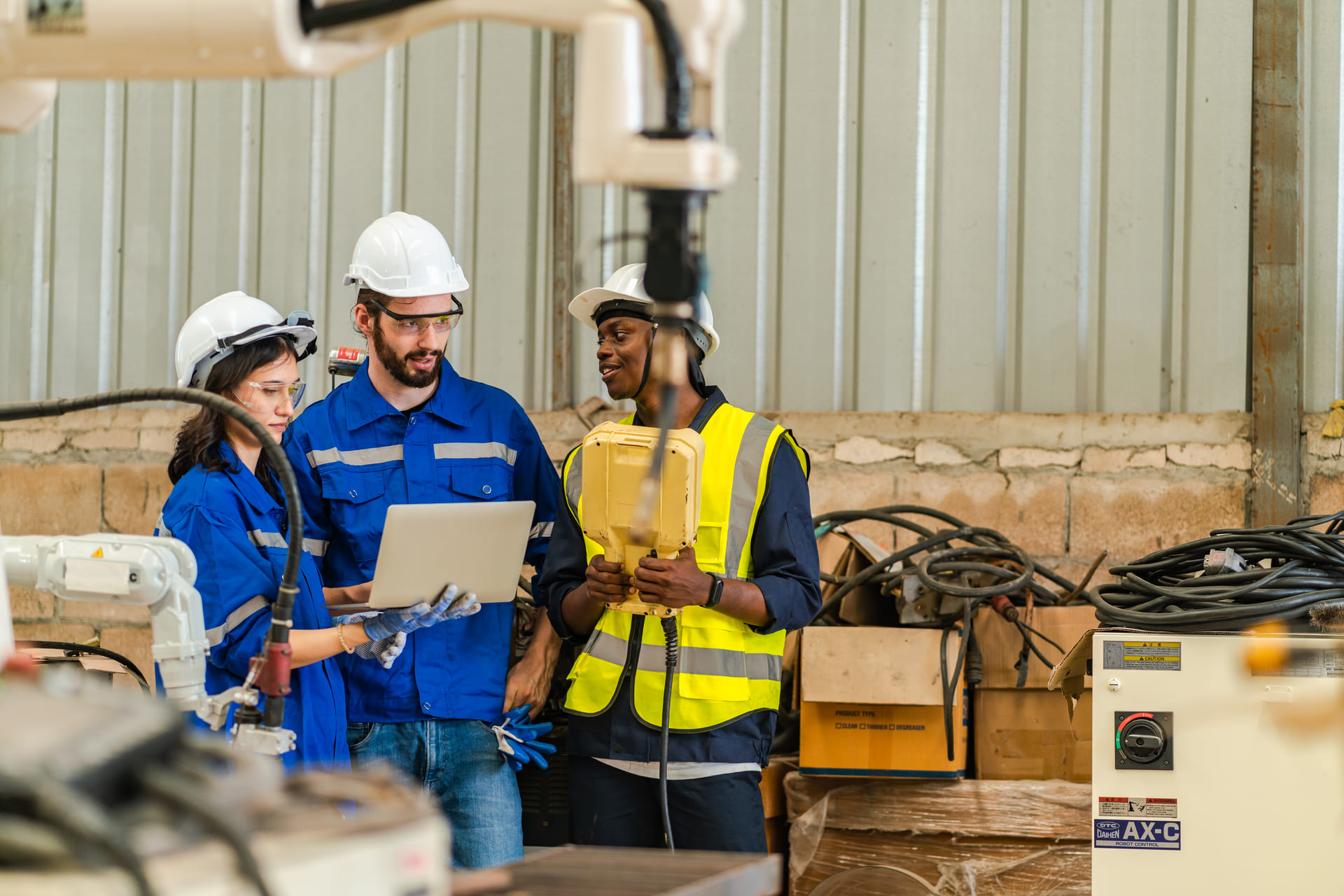
At CMIT Solutions, we see the importance of IT in the manufacturing industry every day: modern plants run on connected systems, and when those systems fail, production stops. We help manufacturers treat IT as a driver of output and protection rather than a cost center, because today it touches every machine, order, and shipment on the floor.
Manufacturing has shifted from isolated machines to networked operations where design, production, and delivery all depend on data moving safely between systems. That shift creates real opportunity, and it also creates risk that many small and mid-sized manufacturers are only beginning to address.
Explore our IT support for manufacturing to see how we keep production running and protected.
How CMIT Solutions supports manufacturers
CMIT Solutions delivers security-first managed IT that keeps manufacturing systems running, protected, and aligned with production goals. We pair responsive local support with a nationwide network of more than 900 IT and cybersecurity professionals, so your plant gets fast help backed by deep expertise.
Most small and mid-sized manufacturers cannot staff a full IT department covering hardware, networking, security, and systems engineering, and that gap widens as operations grow more complex. We act as your outsourced team, monitoring systems around the clock and addressing small issues before they become line-stopping problems.
As your strategic technology advisors, we look past the immediate fix to help you plan upgrades, secure connected equipment, and adopt new tools such as AI with confidence, so technology decisions stay aligned with your production goals and long-term growth. When a problem needs hands on the equipment, our local teams provide on-site support too.
Why IT matters more than ever on the factory floor
IT matters because manufacturing now depends on connected systems for nearly every task, from scheduling production to tracking shipments. When a network goes down or data is lost, the entire operation can stall, and that operational disruption is far more expensive than the fix itself.
Older plants once ran machines in isolation, with technology kept separate from production. Today, information technology and operational technology have merged, meaning the systems running your office and the systems running your machines are increasingly one connected environment.
This convergence delivers speed and visibility, but it also widens the attack surface. We design, monitor, and manage that combined environment with consistent standards across every site, so a single weak point cannot expose both your business data and your production equipment.

The core roles IT plays in modern manufacturing
IT supports manufacturing across several connected functions, each one keeping production efficient and protected. These roles work together to turn raw data into smoother operations and better decisions.
- Process automation: IT systems control robotics and automated lines that run continuously, reduce human error, and produce consistent, high-quality output.
- Supply chain management: Connected systems track materials and finished goods through every stage, helping you anticipate disruptions and keep deliveries on schedule.
- Quality control: Sensors and software catch defects in real time, reducing waste and protecting your reputation with customers.
- Data analysis: Production data is collected and analyzed to reveal where lines slow down, where energy is wasted, and where output can improve.
- Maintenance and repair: Monitoring tools predict equipment failures before they happen, so repairs are scheduled rather than forced by sudden breakdowns.
We tie these functions together into one managed environment, backed by continuous monitoring and rapid threat response, so the technology behind each role is supported and secured rather than left to run on its own.
The technologies reshaping production
Manufacturers are adopting a wave of technologies that depend on sound IT and cybersecurity foundations. Each one adds capability, and each one adds systems that must be managed and secured.
- Industrial Internet of Things (IIoT): Connected sensors and machines share real-time data across the plant, giving operators visibility into performance and resource use.
- Artificial intelligence and machine learning: AI analyzes machine data to predict maintenance needs and optimize production schedules far faster than manual review.
- Digital twins: A virtual model of a machine or production line receives live data, letting teams test changes and forecast maintenance without touching the real equipment.
- Additive manufacturing: Also known as 3D printing, this technology produces custom parts and prototypes quickly while keeping costs controlled.
- Remote monitoring sensors: These track production cycles and flag possible issues, letting service teams respond before a small fault becomes downtime.
Every one of these tools depends on data that must move securely. We help you bring them online with security built in by default, so each new connected device strengthens your operation instead of opening another door for attackers.
Cybersecurity: the risk manufacturers cannot ignore
Manufacturing has become a frequent target for cyberattacks because attackers know that downtime pressure makes manufacturers more likely to pay. As more equipment connects to the network, the number of entry points for ransomware and data theft keeps growing, and many manufacturers are left uncertain whether their defenses are enough.
The federal government recognizes this exposure. The National Institute of Standards and Technology has published cybersecurity risk mitigation guidance for small manufacturers, reflecting how serious and widespread the threat has become.
Our security-first approach protects manufacturers by design rather than by reaction. We layer continuous monitoring, network segmentation, encryption, secure remote access, and employee training across your environment, closing the gaps attackers rely on and adapting protection as threats evolve.
A scenario: when one click stops the line
Consider a mid-sized parts manufacturer with a connected production line and a small office team. An employee opens an email attachment that looks like a purchase order, and ransomware spreads from the office network into the systems controlling the floor.
Within hours, machines sit idle, orders cannot ship, and the company faces a ransom demand plus days of lost production. This scenario is illustrative rather than a real client situation, but it reflects a pattern repeated across the industry.
The damage was preventable, and that is where we come in. We separate office and floor systems through segmentation, maintain monitored backup and recovery for a clean restore, and train your team to spot the messages that start incidents like this one.
Many manufacturers also assume their cyber insurance will cover them after an attack, but insurers increasingly require specific security controls before issuing or renewing coverage.
Use our insurance readiness assessment to see whether your current security environment aligns with modern insurer expectations.
Compliance and the manufacturers it affects
Many manufacturers face compliance obligations that depend directly on their IT controls, and falling short can cost contracts as well as fines. The rules that apply depend on what you make and who you sell to.
The table below outlines common frameworks manufacturers encounter and what each one generally asks of your technology environment.
| Framework | Who it applies to | Core IT focus |
| CMMC | Defense contractors handling controlled unclassified information | Access controls, monitoring, and documented security practices |
| ITAR | Manufacturers handling defense-related technical data | Restricting and protecting access to controlled technical information |
| NIST CSF | Manufacturers seeking a recognized security baseline | Identify, protect, detect, respond, and recover functions |
| PCI-DSS | Manufacturers processing card payments | Securing systems that store or transmit payment data |
Compliance is rarely a one-time project. We track the requirements that apply to your business, put the right controls in place, and keep the documentation that proves they are working, with security standards built to exceed baseline expectations so audits and renewals are far less stressful.
If your plant works with the defense supply chain, our CMMC compliance services help you meet and document the controls auditors expect.
Why downtime is the real cost of weak IT
The true expense of poor IT is not the repair bill; it is the production that stops while systems are down. When technology is treated as a break-fix expense rather than a driver of growth, idle machines mean missed shipments, contract penalties, and customers who may look elsewhere.
Reactive IT waits for something to break, then scrambles to fix it. Proactive, monitored IT watches systems around the clock, catches warning signs early, and resolves many issues before anyone on the floor notices a problem.
That is the model we run for you. With managed, security-first IT in place, your plant spends more time producing and less time recovering, protecting both revenue and the relationships that revenue depends on.
💡 Additional reading: cost of downtime
See what an outage really costs your operation with our IT downtime calculator.
Turn manufacturing IT from a worry into an advantage
You should not have to choose between running your plant and protecting it. At CMIT Solutions, our security-first managed IT combines around-the-clock monitoring, layered cybersecurity, and strategic guidance that keeps production resilient and your technology aligned with business goals, delivered by local teams who know your operation and backed by a nationwide network of more than 900 specialists.
We have helped multi-location businesses turn fragmented, unreliable IT into a single secure environment that supports growth. Our Optyx case study shows how we unified IT across several sites and strengthened security while giving the team dependable support.
Talk with a CMIT Solutions IT expert today by calling (800) 399-2648 or visiting our contact page to start the conversation.
FAQs
What does an IT provider for a manufacturing company actually do?
A manufacturing IT provider manages and secures the technology your plant runs on, from networks and servers to connected machines and data systems. CMIT Solutions monitors these systems around the clock, prevents and responds to cyber threats, supports your staff, and plans upgrades that keep production moving without interruption.
Is managed IT worth it for a small manufacturer, or should we hire in-house?
Managed IT is usually the better fit for small manufacturers, because hiring in-house staff to cover hardware, networking, security, and systems engineering is costly and hard to sustain. A managed provider gives you that full range of expertise for a predictable monthly fee, scaling support as you grow.
How do I know if my manufacturing plant’s IT is actually secure?
You can gauge your security by checking for a few essentials: continuous monitoring, network segmentation between office and floor systems, tested backups, controlled access, and employee training. If any are missing or untracked, gaps likely exist. A professional security assessment gives you a clear, documented picture of where you stand.
Can a managed IT provider work alongside our existing IT staff?
Yes, this arrangement is called co-managed IT, and it is common in manufacturing. Your internal team handles day-to-day tasks while the provider adds specialized skills, around-the-clock monitoring, and extra capacity during busy periods. CMIT Solutions tailors the split so your staff stays focused on what they do best.
What should I look for when choosing an IT company for my factory?
Look for an IT company with real manufacturing experience, strong cybersecurity capabilities, and the ability to support both office systems and production equipment. Confirm they offer around-the-clock monitoring, fast local response, and compliance support. The best partners act as strategic advisors who align technology decisions with your production goals.